Sunscreen for Pigmentation: Why SPF Matters in Pakistan's Sun
Dark spots keep coming back? Learn how SPF, UVA and visible light affect pigmentation, and how much sunscreen to really apply.
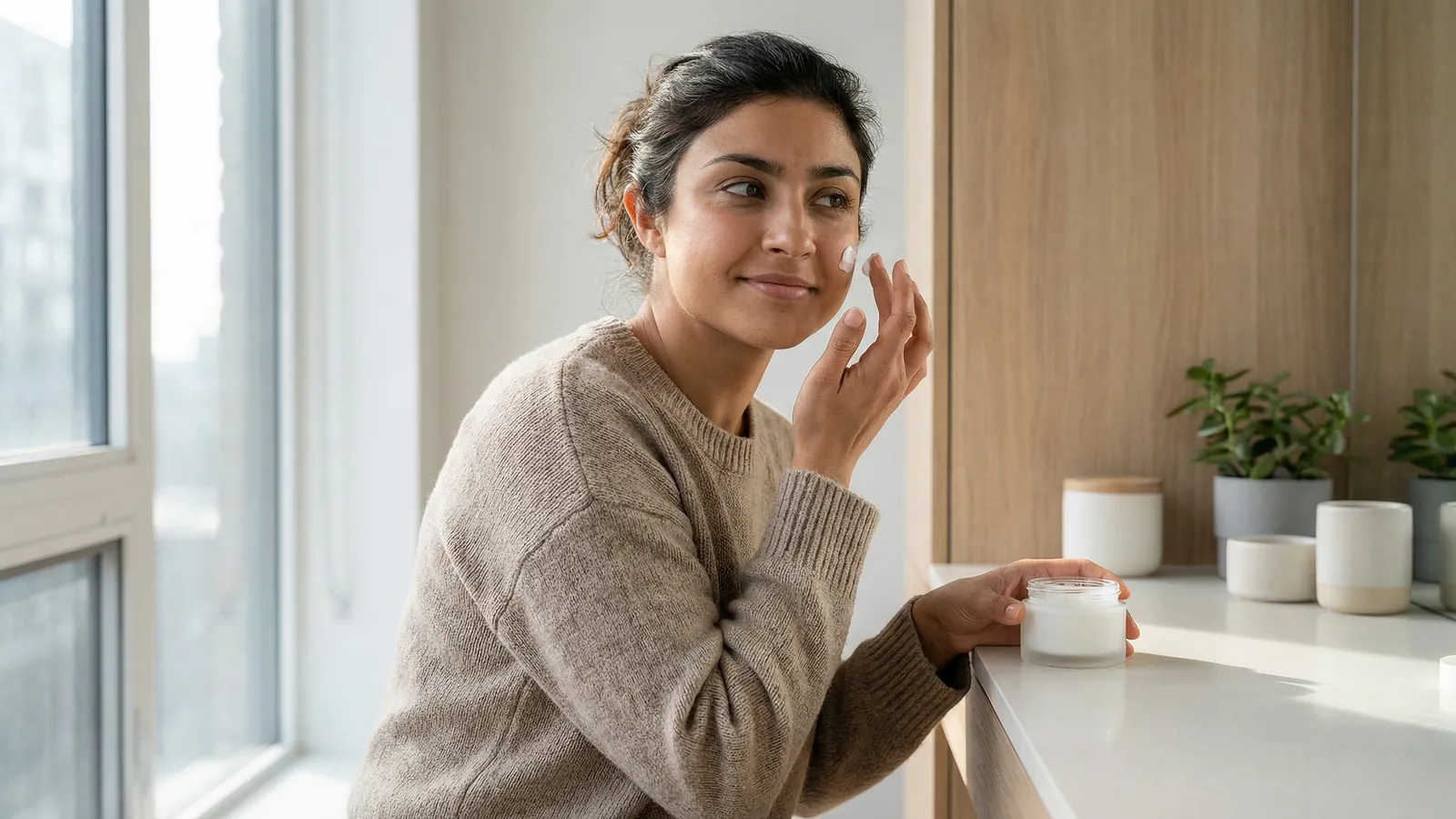
You have tried brightening creams, face washes, maybe even tablets, but your dark spots and patches keep coming back. Most of the time, the missing piece is not a new cream. It is sunscreen, used properly, every day.
In Pakistan’s strong sun, this one habit decides whether pigmentation fades or gets darker. Here is how sunscreen works, what SPF and UVA mean, and how much to actually apply.
Quick answer
Sunlight tells skin to make more pigment, so dark spots and melasma darken without protection. Use a broad-spectrum sunscreen of SPF 30 or higher every day, about a teaspoon for face and neck, 15 minutes before going out. Reapply every two hours outdoors and after sweating. Tinted sunscreens with iron oxide add visible-light protection.
Key takeaways
- No brightening product can keep up if your skin is not protected from the sun.
- SPF measures UVB (burning) protection. “Broad-spectrum” means UVA protection too.
- Most people apply too little. For the face, aim for about a teaspoon.
- Reapply every two hours outside, and after sweating, which in Pakistan’s heat is often.
- Use it on cloudy days and indoors near windows too.
Why the sun makes pigmentation worse
Melanin is your skin’s natural defence against sunlight. When sun hits your skin, pigment cells make more melanin to protect it. In areas that already have extra pigment, such as pimple marks, sun spots or melasma, this response is often stronger.
DermNet explains that both ultraviolet (UV) and visible light can trigger melasma, and that it often returns with summer sun. It also notes that marks left after pimples tend to be darker and longer-lasting in brown skin.
So if you use a brightening cream at night but go out unprotected in the day, you are working against yourself. The American Academy of Dermatology (AAD) calls sunscreen essential for fading dark spots, because it helps clear them and prevents new ones.
Why this matters even more in Pakistan
For much of the year, the midday sun in Karachi, Lahore, Multan and Hyderabad is fierce. Many people spend time outside without thinking of it as “sun exposure”: riding a bike, waiting for a rickshaw, walking to college, or shopping in an open bazaar.
Heat and humidity add another problem. Sweat breaks down and washes off sunscreen, so one morning layer rarely lasts the whole day. Load-shedding afternoons without a fan make it worse.
SPF, UVA and UVB explained simply
UVB: the burning rays
The AAD describes UVB as the main cause of sunburn. Window glass blocks most UVB.
UVA: the ageing rays
UVA goes deeper into the skin and contributes to ageing and pigment. The AAD notes that UVA passes through window glass, so sitting by a window or in a car still counts as exposure.
Visible light
Ordinary visible light can also darken pigment, especially in brown skin. The AAD and DermNet suggest a tinted sunscreen containing iron oxide for people with dark spots or melasma, because iron oxide helps block visible light. Iron oxide is often listed among the inactive ingredients.
What does SPF mean?
SPF (sun protection factor) tells you how well a sunscreen protects against UVB. The AAD says SPF 30 blocks about 97% of UVB rays, and no sunscreen blocks 100%.
A higher SPF gives a bit more protection, but it is not a reason to apply less or skip reapplying. Applying enough and reapplying matter more than chasing a big number.
| Label term | What it means | What to look for |
|---|---|---|
| SPF | Protection from UVB (burning) | 30 or higher |
| Broad-spectrum | Protects against UVA and UVB | Printed on the label |
| UVA stars / UVA logo | UVA rating used in the UK and EU | 4–5 stars, or “UVA” in a circle |
| Water-resistant | Stays on longer when sweating or swimming | Still reapply after sweating |
| Iron oxide (tinted) | Extra protection from visible light | In the ingredients list |
How much sunscreen to apply
This is where most people go wrong. The AAD says most people apply only a fraction of the amount needed, which means they get much less protection than the label promises.
- Face (and neck): about one teaspoon. The AAD describes this as roughly enough to cover the length of your index and middle fingers (the “two-finger” rule).
- Whole body: about a shot glass full (1 ounce) for exposed skin, according to the AAD. The NHS suggests 6–8 teaspoons for an adult’s whole body.
Spread it evenly. Do not forget the sides of your face, ears, neck, and the backs of your hands, where sun spots often appear.
When and how often to reapply
- Apply about 15 minutes before going outside, so it can settle.
- Reapply every two hours while outdoors.
- Reapply straight after sweating, swimming, or towel-drying your face.
- Wear it on cloudy days. The AAD says up to 80% of UV rays can reach your skin through clouds.
If you wear makeup, a sunscreen stick or powder with SPF can make touch-ups easier during the day. If you spend most of the day indoors away from windows, one careful morning application may be enough, but reapply before you head out.
From ZarDerm
Glowzar Brightening Cream SPF 60
A day cream with SPF 60 built in (Benzophenone-3 UV filter), combined with L-Glutathione, Kojic Acid, Vitamin C (MAP), Arbutin and Vitamin E. Apply it every morning after cleansing and reapply if you are outdoors for long hours.
Choosing a sunscreen for pigmentation in Pakistan
For oily or acne-prone skin
Choose a light, non-comedogenic formula that does not feel heavy in humidity. A gel or light cream usually works better than a thick lotion. Our skincare routine for oily skin in Pakistan’s heat shows how to fit sunscreen in without feeling greasy.
For melasma
Pick a high SPF and, if possible, a tinted formula with iron oxide. DermNet recommends year-round, lifelong sun protection for melasma, plus a broad-brimmed hat.
For brown skin and white cast
Mineral sunscreens (zinc oxide, titanium dioxide) can leave a grey or white cast. A tinted version, or a cream that blends in, is easier to wear daily. The best sunscreen is the one you will actually use every day.
Sunscreen is not your only shield
The AAD reminds us that no sunscreen blocks all UV rays. Add these habits:
- Stay in the shade in the strongest midday sun, roughly 10 am to 2 pm when you can.
- Wear a cap, wide hat, or use an umbrella.
- Use a dupatta, scarf or cotton sleeves for extra cover.
- Keep your car windows up or use sun shades on long drives.
Putting it into a routine
Sunscreen works best as part of a simple plan. First, understand what is causing the dark spots on your face. Then build a routine of:
- A gentle cleanser morning and night
- Sunscreen or an SPF day cream every morning
- One brightening product, if your skin tolerates it
Some people also add a supplement. Read our honest glutathione tablets guide first. Tablets can only support sun protection, never replace it.
From ZarDerm
The Bright routine
Pair the Glowzar Lightening & Brightening Face Wash, a soap-free foam for morning and night, with the Glowzar Cream SPF 60. Build it in the routine builder to get 10% off two or more products.
You can also see the full Dark Spots & Uneven Tone range, or read about the Glowzar Face Wash on its own.
When to see a doctor
See a dermatologist if:
- Your pigmentation has not improved after 3 months of daily sunscreen and gentle care
- You get dark patches during pregnancy or after starting hormonal medicines
- A spot is changing size, shape or colour, bleeds, or has uneven edges
- You get a rash, burning or swelling after using a sunscreen
- You burn easily or have had severe sunburn in the past
A dermatologist can confirm what kind of pigmentation you have and offer prescription treatments if needed.
Frequently asked questions
Can sunscreen alone remove dark spots?
Sunscreen does not bleach spots away, but the AAD says it can help existing spots fade and prevent new ones. Combined with stopping the trigger and time, it is often the biggest difference-maker.
Is SPF 30 enough in Pakistan?
SPF 30 is the minimum the AAD recommends. A higher SPF gives a little more protection, which can help in strong sun or with melasma. Applying enough and reapplying matter more than the number.
Do I need sunscreen if I have brown skin?
Yes. Brown skin has some natural protection from burning, but it is more likely to get dark spots and long-lasting marks. Sun protection helps keep tone even.
Do I need sunscreen indoors?
If you sit near windows or travel by car, yes, because UVA passes through glass. If you are deep indoors all day, a morning layer is usually enough.
Can I apply sunscreen over makeup?
It is easier to apply sunscreen first, let it settle, then do makeup. For touch-ups, an SPF powder or stick on top is better than nothing.
This article is general information, not medical advice. If you have a skin condition, sensitive skin, or a spot that worries you, please see a qualified doctor or dermatologist.
Sources
- Sunscreen FAQs — American Academy of Dermatology (accessed 2026)
- How to apply sunscreen — American Academy of Dermatology (accessed 2026)
- 5 common sunscreen mistakes and how to avoid them — American Academy of Dermatology (accessed 2026)
- How to fade dark spots in darker skin tones — American Academy of Dermatology (accessed 2026)
- Melasma — DermNet (accessed 2026)
- Postinflammatory hyperpigmentation — DermNet (accessed 2026)
- Sunscreen and sun safety — NHS (accessed 2026)
Not sure what your skin or hair needs?
Take the 1-minute quiz and get a routine with 10% off.
Keep reading
All articles Pigmentation & Dark Spots
Dark Spots on Face: Causes and How to Fade Them
Pimple marks, sun spots or melasma? Learn what causes dark spots on your face and a simple, honest plan to help them fade.
 Pigmentation & Dark Spots
Glutathione Tablets: Benefits, Dosage and Side Effects (Honest Guide)
Do glutathione tablets work for skin? An honest look at the evidence, dosage, side effects and the risks of whitening injections.
 Hair Fall
 in Pakistan: 9 Common Causes and What Actually Helps
From low ferritin and vitamin D to stress, PCOS and hard water: the real hair fall reasons in Pakistan, and what actually helps.