Hair Fall in Pakistan: 9 Common Causes and What Actually Helps
From low ferritin and vitamin D to stress, PCOS and hard water: the real hair fall reasons in Pakistan, and what actually helps.
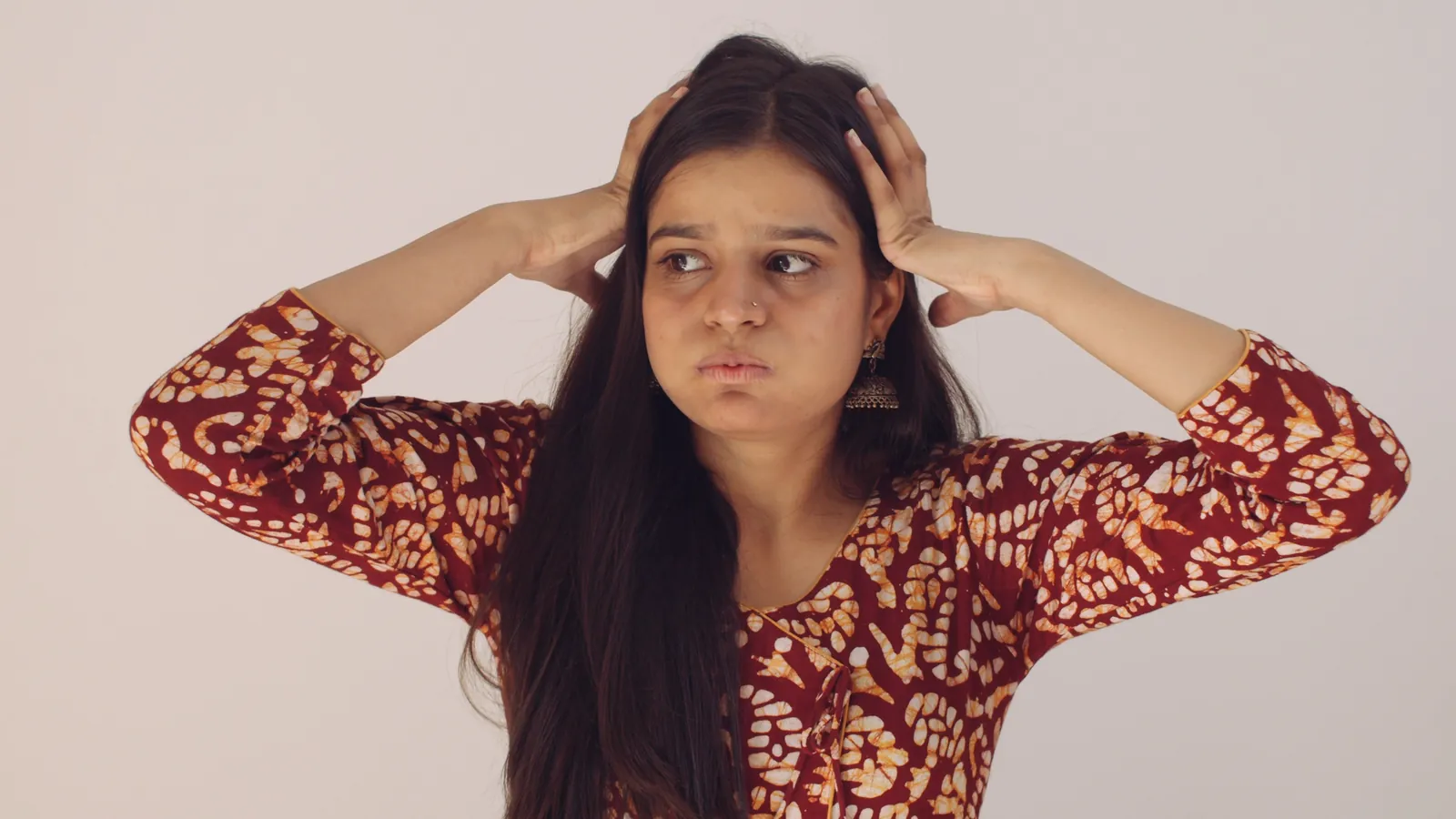
You brush your hair and the comb is full. There are strands on the pillow, in the shower drain and on your dupatta, and everyone has a different reason for it: the water, the heat, the shampoo, stress.
The truth is that hair fall usually has more than one cause, and the right fix depends on which one is yours. Here are the nine most common reasons we see in Pakistan, and what actually helps for each.
Quick answer
The most common hair fall reasons in Pakistan are low iron or vitamin D, thyroid problems, PCOS, childbirth, stress or illness, dandruff, tight hairstyles and heat styling, hard water breakage, and family-pattern thinning. Losing 50–100 hairs a day is normal. If you shed more for over two months, get ferritin, vitamin D and TSH checked through a doctor.
Key takeaways
- Shedding 50–100 hairs a day is normal. Worry when it is clearly more, or when you see thinning patches.
- Stress, fever or childbirth often cause shedding 2–3 months later, so the trigger is easy to miss.
- Hard water can make hair weaker and more likely to break, but there is no good evidence it makes hair fall from the root.
- Blood tests (ferritin, vitamin D, thyroid) are the fastest way to find a fixable cause.
- Only take iron, zinc or high-dose vitamins when a test shows you need them.
First: is it shedding or hair loss?
Everyone sheds. The American Academy of Dermatology says losing about 50 to 100 hairs a day is normal, because old hairs fall out to make room for new ones.
Doctors separate two problems:
- Excess shedding (telogen effluvium): lots of full-length hairs fall out all over the head. It is usually temporary.
- Hair loss: something stops hair from growing, such as genetics, tight hairstyles or an immune problem. You see a wider parting, a receding hairline or patches.
The 9 common causes of hair fall in Pakistan
1. Low iron (check your ferritin)
Iron deficiency is one of the most common causes doctors look for, especially in women with heavy periods, after pregnancy, or on low-meat diets. Ferritin is the blood test that shows your iron stores; a normal haemoglobin does not always mean your iron stores are fine.
Studies of women with hair fall, including one published in the Journal of Pakistan Association of Dermatologists, found lower ferritin in several types of hair loss. The AAD notes that when iron is the problem, hair can regrow once the body gets enough.
2. Low vitamin D
A 2024 study of 120 Pakistani patients with diffuse hair fall, listed on Aga Khan University’s research portal, found that 95 of them (79%) were vitamin D3 deficient.
That is an association, not proof that low vitamin D caused their hair fall. But it is a good reason to test. Strong sunshine outside does not help much if you spend most of the day indoors or fully covered.
3. Thyroid problems
Both an underactive and an overactive thyroid can cause thinning hair. The AAD says treating the thyroid condition can reverse the hair loss. A simple TSH blood test is the usual first check, especially if you also feel tired, cold, anxious or notice weight changes.
4. PCOS and hormone changes
Polycystic ovary syndrome (PCOS) is a common cause of thinning in women. Clues include acne, irregular periods and extra hair on the face or body. Stopping some birth control pills can also cause a temporary hormone shift and shedding.
PCOS needs a doctor (often a gynaecologist) because the hair is only one part of it.
5. After childbirth
Many new mothers panic when hair starts coming out in handfuls. The AAD says this shedding often starts around two months after birth and peaks around four months.
It is usually temporary, and hair often returns to normal fullness within 6–9 months. Low iron after pregnancy can make it worse, so a ferritin test is still worth it.
6. Stress, fever, dengue or crash dieting
A big shock to the body pushes many growing hairs into the resting phase at once. Triggers include high fever (dengue, typhoid), surgery, major stress or fast weight loss.
The confusing part is the delay. DermNet says the extra shedding usually shows up 2–4 months after the trigger, most often around 2–3 months. So the hair fall you notice in October may come from the fever you had in July.
The good news: it usually settles on its own over about 6–9 months once the trigger is gone.
7. Dandruff and an itchy, oily scalp
Dandruff is a mild form of seborrhoeic dermatitis, linked to the Malassezia yeast that lives on everyone’s scalp. Dandruff alone is not a major cause of hair loss, but constant scratching and an inflamed scalp do not help, and sweaty summers and load-shedding days make an oily scalp feel worse.
DermNet lists zinc pyrithione, salicylic acid and ketoconazole as common scalp treatments, usually used a couple of times a week.
From ZarDerm
Zarvion Anti Hair Fall Shampoo
A sulphate-free, paraben-free shampoo with Zinc Pyrithione, Salicylic Acid, Biotin, Keratin and Vitamin B6, used on alternate days. It cleans an oily, flaky scalp gently; it will not fix a deficiency, so pair it with a blood test if shedding is heavy.
8. Tight hairstyles, heat and chemical treatments
Tight ponytails, buns, braids and hijab or scarf styles pulled hard at the hairline can cause traction alopecia. The AAD warns that if a hairstyle feels painful, it is too tight, and that long-term traction can become permanent.
Rebonding, relaxing, colouring and daily straightening damage the hair shaft, so it snaps.
- Tie hair loosely, and change where you put the band.
- Under a scarf or hijab, use a soft, loose tie; silk or satin is gentler.
- Keep straighteners and blow-dryers on lower heat, and not every day.
- Space out chemical treatments.
9. Genetics: male and female pattern hair loss
If your father, mother or grandparents thinned early, this may be you too. In men it shows as a receding hairline and thinning crown. In women, the parting widens and the top looks thinner, while the hairline usually stays.
Male pattern hair loss is linked to a genetic sensitivity to DHT, a hormone made from testosterone. This type is gradual and does not stop on its own. Proven medical options like minoxidil work best when started early. Read our honest comparison of Procapil vs minoxidil for hair fall.
What about hard water?
Hard water is the first thing many people in Karachi and Lahore blame, so here is the honest answer.
A Khyber Medical University study soaked hair from 70 men in very hard water from Khyber Pakhtunkhwa. It came out about 8% weaker than untreated hair, so hard water can increase breakage.
But that was a lab test on cut strands. It did not measure hair falling from the root, and there is no good evidence hard water causes that. Short broken bits point to breakage; full-length hairs with a tiny white bulb point to shedding.
A conditioner and a gentle shampoo help with dryness and frizz. Don’t expect them to stop shedding that comes from inside.
Quick guide: what your hair fall might be telling you
| What you notice | Likely cause | First step |
|---|---|---|
| Sudden heavy shedding all over | Fever, stress, childbirth, crash diet (2–3 months ago) | Think back, then test ferritin, vitamin D, TSH |
| Slow thinning at crown or parting | Male or female pattern hair loss | See a dermatologist early |
| Thinning plus acne and irregular periods | PCOS | See a gynaecologist or dermatologist |
| Short broken pieces, dry ends | Breakage: heat, chemicals, hard water | Less heat, conditioner, gentle shampoo |
| Thinning at the hairline or temples | Tight hairstyles (traction) | Loosen styles now |
| Round smooth bald patches | Possibly alopecia areata | See a dermatologist |
What actually helps
1. Get the right blood tests
Ask your doctor about ferritin, vitamin D and TSH. They may add a blood count, B12 or PCOS hormone tests.
2. Fix deficiencies, but don’t guess
The AAD advises taking biotin, iron or zinc only when a blood test shows you are low, because extra iron in particular can be harmful. If your doctor confirms a gap, a supplement can help fill it.
- Zarvion Biotin 5000 mcg tablets contain biotin plus Vitamin D3 800 IU, Iron 14.5 mg and zinc per tablet.
- Zarvit Multivitamin has 21 vitamins and minerals, including Iron 18 mg and Zinc 15 mg per tablet.
Both contain iron, so check with your doctor before taking them together or alongside an iron prescription. Wondering if biotin is worth it at all? Read does biotin help hair fall, and our guide to multivitamins for hair, skin and nails.
3. Eat enough protein
Daal, eggs, chicken, fish, milk and yoghurt all supply protein, and many supply iron or zinc too. Very low-calorie diets are a common trigger for shedding.
4. Give it time
Hair grows slowly. Whatever you change, give it at least 8–12 weeks before judging, and 6 months for pattern hair loss.
From ZarDerm
The Hair routine: Zarvion Serum + Shampoo
Zarvion Hair Growth Serum lists its strengths on the pack, including Procapil 3%, Biotin 0.3% and Zinc Gluconate 1.5%. Spray it on a dry scalp at night and wash out with Zarvion Shampoo in the morning; give it 8–12 weeks. It supports your scalp care, but it is not a replacement for treating a deficiency or a medical cause.
You can also browse everything in our Hair Fall & Thinning range, or the Zarvion Hair Growth Serum on its own.
When to see a doctor
See a dermatologist or your GP if:
- Heavy shedding lasts more than 2–3 months.
- You see bald patches, a widening parting or a receding hairline.
- Your scalp is red, painful, scaly or has pus or scarring.
- Hair fall comes with tiredness, weight changes, irregular periods, acne or extra facial hair.
- You started a new medicine before the hair fall began (do not stop it on your own).
- Hair loss is affecting your mood or confidence.
Frequently asked questions
How many hairs a day is normal to lose?
About 50 to 100. On wash days it can look like more because hair that was already loose comes out together.
Does hard water cause hair fall?
It can make hair weaker and more likely to break, according to a Pakistani lab study. There is no good evidence that it makes hair fall out from the root.
Which blood test is best for hair fall?
Doctors commonly start with ferritin, vitamin D and TSH (thyroid), sometimes with a full blood count and B12. Your doctor will decide based on your symptoms.
Is oiling good for hair fall?
Oiling can soften dry hair, but it will not fix iron, thyroid or hormone causes.
Not sure where to start?
Take our short skin and hair quiz to get a simple routine suggestion, then talk to your doctor about tests.
This article is general information, not medical advice. Hair fall can have medical causes, so please see a qualified doctor for diagnosis, especially before starting supplements if you are pregnant, breastfeeding or on medication.
Sources
- Filling the Gaps: Vitamin D Status in Diffuse Hair Fall Among Pakistanis — Dermatology Practical & Conceptual / Aga Khan University (2024)
- Hair shedding — American Academy of Dermatology
- Hair loss: Who gets and causes — American Academy of Dermatology
- Hairstyles that can cause hair loss — American Academy of Dermatology
- Hair loss: Diagnosis and treatment — American Academy of Dermatology
- Telogen effluvium — DermNet
- Seborrhoeic dermatitis — DermNet
- Male pattern hair loss — DermNet
- Female pattern hair loss — DermNet
- Hair Loss in Women — Cleveland Clinic
- Hair loss — NHS
- Dermoscopic study of hair loss in females and its correlation with serum ferritin levels — Journal of Pakistan Association of Dermatologists (2019)
- To Evaluate and Compare Changes in Baseline Strength of Hairs after Treating them with Deionized Water and Hard Water — International Journal of Trichology (2018)
Not sure what your skin or hair needs?
Take the 1-minute quiz and get a routine with 10% off.
Keep reading
All articles Hair Fall
Biotin for Hair Fall: Does It Work and How Much to Take?
Biotin helps hair fall mainly when you're deficient, which is rare. Here's what the evidence says, safe amounts, and the lab test warning.
 Hair Fall
Procapil vs Minoxidil: Which Is Better for Hair Fall?
Minoxidil is a proven medicine; Procapil is a gentler cosmetic peptide with weaker evidence. Here's when each makes sense.
 Pigmentation & Dark Spots
Dark Spots on Face: Causes and How to Fade Them
Pimple marks, sun spots or melasma? Learn what causes dark spots on your face and a simple, honest plan to help them fade.