Fungal Acne or Regular Pimples? How to Tell the Difference
Itchy, same-size bumps that never clear? Learn how fungal acne differs from regular pimples, what triggers it, and how doctors treat it.
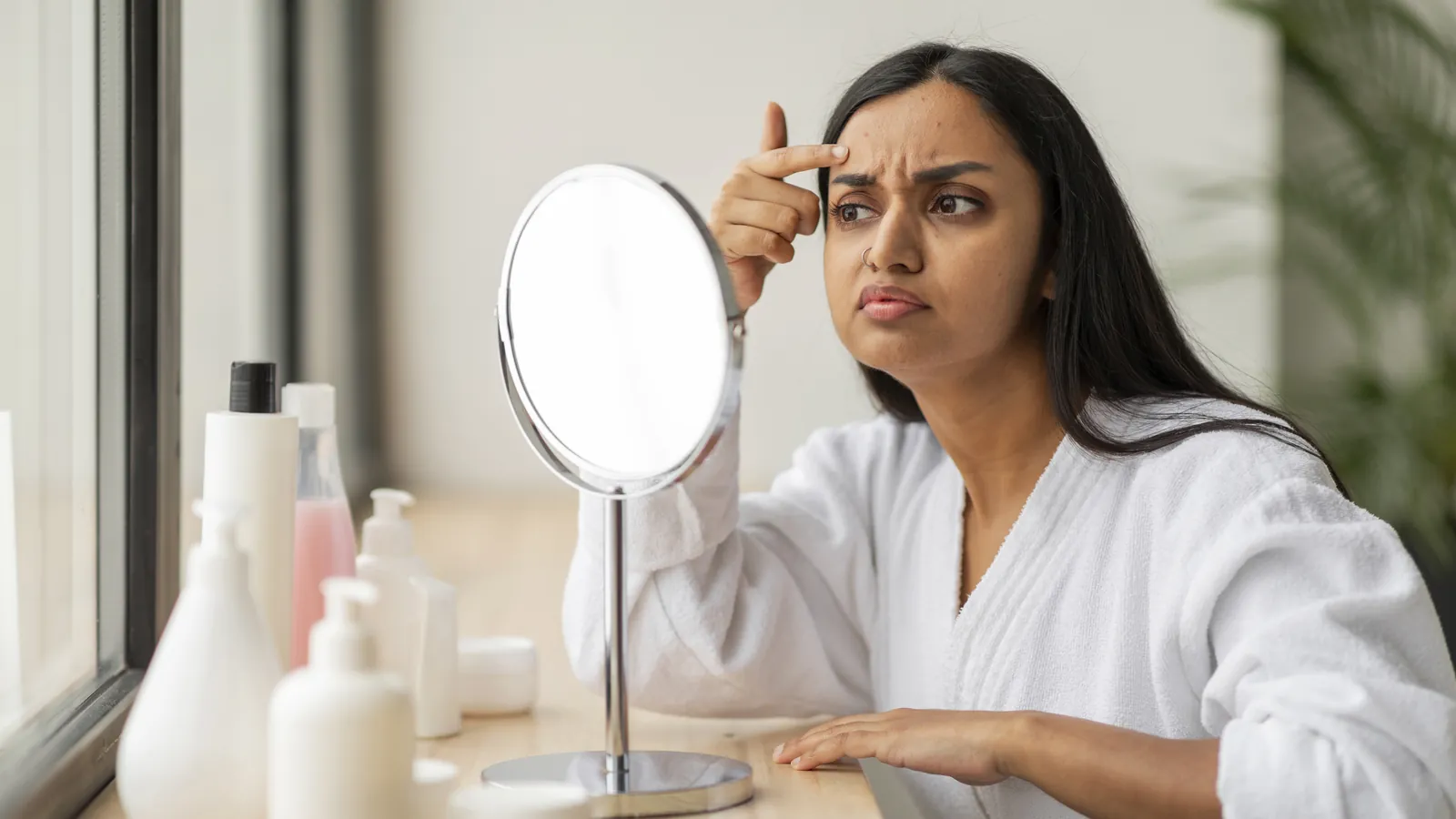
You have tried every acne face wash, maybe even a course of antibiotics, and the tiny bumps on your forehead, chest or back keep coming back. They itch, especially after a sweaty day. If that sounds familiar, you may not be dealing with regular pimples at all, but with what people call “fungal acne”.
Quick answer
Fungal acne (Malassezia folliculitis) is a yeast infection of the hair follicles, not true acne. It usually shows as small, same-size, itchy bumps on the chest, upper back, shoulders or forehead, with no blackheads. It flares in heat and sweat, often gets worse with antibiotics, and needs a doctor’s diagnosis and antifungal treatment.
Key takeaways
- Itch, uniform small bumps and no blackheads are the main clues that it may be fungal, not regular acne.
- Heat, humidity, sweat, tight clothes and heavy creams help the yeast grow, which is why it is common in Pakistan’s summers and monsoon.
- Acne antibiotics do not help fungal acne and can make it worse.
- A doctor can confirm it with a simple skin scraping test and prescribe antifungals.
- A sulphur and salicylic acid wash can support oily, fungal-prone skin, but it does not replace medical treatment.
What is fungal acne?
The medical name is Malassezia folliculitis (older name: pityrosporum folliculitis). Malassezia is a yeast that lives on almost everyone’s skin, feeding on skin oil. Most of the time it causes no problem.
Under certain conditions it overgrows inside the hair follicles and causes inflamed, itchy bumps. DermNet notes it is most common in teenagers and young adult men, though anyone can get it.
So “fungal acne” is a misleading name. It is a follicle infection that looks like acne, which is exactly why it gets missed.
What is regular acne?
Regular acne (acne vulgaris) starts when pores get clogged with oil and dead skin cells. According to the American Academy of Dermatology (AAD), hormones that increase oil production play a big part, and acne often runs in families.
Clogged pores show up as blackheads and whiteheads. When bacteria and inflammation join in, you get red pimples, pus spots and, in severe cases, deep painful lumps.
Fungal acne vs acne: side-by-side
This table sums up the usual differences. Real skin does not always follow the textbook, and some people have both at the same time.
| Feature | Fungal acne (Malassezia folliculitis) | Regular acne (acne vulgaris) |
|---|---|---|
| Cause | Overgrowth of Malassezia yeast in hair follicles | Clogged pores, oil, bacteria and inflammation |
| Itch | Usually itchy, often worse after sweating | Usually not very itchy; may be sore |
| How the bumps look | Small, similar-size red bumps and tiny pus spots | Mixed: blackheads, whiteheads, pimples of different sizes, sometimes cysts |
| Blackheads / whiteheads | Absent | Usually present |
| Common places | Upper back, chest, shoulders, forehead and hairline, chin, neck, upper arms | Face first; also chest, back and shoulders |
| Triggers | Heat, humidity, sweat, tight or synthetic clothes, heavy creams, antibiotics, steroids | Hormones, family history, oily products, friction, some medicines |
| Response to acne antibiotics | Does not improve and may get worse | Often improves |
| Medical treatment | Antifungal creams, washes or tablets from a doctor | Benzoyl peroxide, retinoids, antibiotics or other prescription options |
Signs it may be fungal, not regular acne
- It itches. Itch is one of the strongest clues. Regular pimples are more often sore than itchy.
- The bumps all look alike. DermNet describes small, uniform bumps and pustules. Regular acne is usually a mix.
- No blackheads. Fungal acne does not form blackheads or whiteheads.
- Location. It is most common on the upper back and chest, and also appears on the forehead, hairline, chin, neck and upper arms.
- It flares with heat and sweat. Worse in summer, monsoon, after the gym, or after a night without a fan.
- Acne treatment has not helped, or it got worse after a course of antibiotics.
None of these signs alone proves anything. They are reasons to ask a doctor, not a home diagnosis.
Why it is so common in Pakistan
DermNet lists a hot, humid climate, excess sweating, oily skin and occlusion (skin covered by heavy creams or sunscreen) among the main risk factors. That describes much of Pakistan for a large part of the year.
- Monsoon humidity in Karachi and Lahore keeps skin damp for hours.
- Load-shedding nights mean sleeping in sweat with no fan.
- Synthetic uniforms and tight gym wear trap sweat on the chest and back.
- Motorbike helmets keep the forehead hot and sweaty on every ride.
- Heavy oils and thick creams on the face or hair can seal in sweat and oil.
For a full daily plan for this weather, read our oily skin routine for Pakistan’s heat and humidity.
Why antibiotics can make fungal acne worse
Antibiotics kill bacteria, not yeast. When bacteria on the skin are reduced, the yeast has less competition and can grow more.
A 2025 review in the Journal of Fungi notes that antibiotics are generally not effective for Malassezia folliculitis and may make it worse. DermNet also lists antibiotic use as a risk factor. The same review warns that steroid creams can calm the redness for a while, then cause a rebound flare.
This is a common story: someone is given antibiotics for “acne”, the itchy bumps spread, and a stronger antibiotic follows. If that sounds like you, tell your doctor about the itch.
Please do not buy antibiotics or steroid creams over the counter for bumps you have not had checked. They may be easy to buy, but using them on the wrong problem can keep you stuck for months.
How a doctor diagnoses it
A dermatologist often suspects fungal acne just from how it looks and itches. To confirm it, they may:
- Gently scrape a bump and look at it under a microscope with a KOH (potassium hydroxide) test to see the yeast.
- Use a Wood’s lamp or dermoscopy to look at the follicles more closely.
- Rarely, take a small skin biopsy if the picture is unclear.
The KOH test is a simple clinic test. It is worth asking about, because the treatment is very different from acne treatment.
The treatment route: antifungals
Treatment for fungal acne is antifungal, chosen by your doctor. According to DermNet and the 2025 review, options include:
- Antifungal washes and shampoos used on the skin, such as ketoconazole or selenium sulfide, left on for a few minutes before rinsing.
- Antifungal creams such as econazole or ketoconazole.
- Antifungal tablets for widespread or stubborn cases. These must be prescribed and checked by a doctor.
Fungal acne often comes back, especially in hot weather. Doctors commonly suggest a maintenance wash once a week, along with reducing sweat and occlusion.
Where a sulphur and salicylic acid wash fits
A medicated bar is not a substitute for a diagnosis or prescribed antifungal treatment. It can, however, be a helpful supportive step for oily, sweaty, fungal-prone skin.
A review in the Journal of Drugs in Dermatology describes sulphur as having antifungal, antibacterial and pore-loosening activity. Salicylic acid helps clear dead skin from pores. Used as a short-contact lather on the chest, back and shoulders, this kind of wash suits the areas where both fungal acne and regular acne tend to appear.
See our step-by-step guide on how to use sulphur soap for pimples and fungal acne, including who should avoid it.
From ZarDerm
Fungizar Medicated Bar with Sulphur & Salicylic Acid
Made for oily, congested, breakout-prone skin on the face, back, chest and shoulders, with sulphur, salicylic acid and EDTA. Lather, leave on for a few minutes, then rinse; it can support your routine alongside whatever your doctor prescribes.
Daily habits that help both types
- Shower soon after sweating, after the gym, a long ride, or a hot night.
- Wear loose cotton or breathable fabrics, and change out of damp uniforms quickly.
- Choose light, oil-free products. Skip heavy oils on acne-prone areas.
- Wash helmet liners, caps, pillowcases and towels often.
- Do not scrub or pick. It irritates the skin and can leave marks.
- Use sunscreen on your face. A light day cream with SPF, like Glowzar Brightening Cream SPF 60, helps protect marks from darkening in strong sun.
If the breakouts are mostly on your back, our guide to back acne causes and prevention covers bags, uniforms and hair products in detail. You can also browse our oily skin and pimples range or take the skin quiz to find a routine.
When to see a doctor
See a doctor or dermatologist if:
- Your bumps itch and look the same size, and you think they may be fungal.
- Acne treatment or antibiotics have not helped, or made things worse.
- The breakouts keep coming back every summer or monsoon.
- You have deep, painful lumps, scarring or dark marks.
- You take steroid tablets or creams, or have a weak immune system.
- The skin is hot, swollen and red, or you have a fever.
Getting the right diagnosis early saves months of using the wrong treatment.
Frequently asked questions
How do I know if I have fungal acne or normal pimples?
Itchy, small bumps that all look the same, with no blackheads, mainly on the chest, back or forehead, point towards fungal acne. A doctor can confirm it with a quick skin scraping test.
Can fungal acne go away on its own?
It may calm down in cooler weather, but it often returns when heat and sweat come back. Antifungal treatment and changing the triggers usually work better than waiting.
Is fungal acne contagious?
No. The yeast already lives on everyone’s skin. The problem is overgrowth, not catching it from someone.
Can I use a sulphur soap for fungal acne?
A sulphur and salicylic acid wash can support fungal-prone skin, since sulphur has antifungal activity. Use it alongside, not instead of, the treatment your doctor recommends.
Why did my acne get worse after antibiotics?
If the bumps were fungal, antibiotics would not help and may let the yeast grow more. Go back to your doctor and mention the itch.
Can I have fungal acne and regular acne together?
Yes. Many people have both, for example regular pimples on the face and fungal bumps on the chest and back. A doctor can plan treatment for each.
This article is general information, not medical advice. Fungal acne and regular acne need a proper diagnosis, so please see a doctor before starting antibiotics, steroid creams or antifungal tablets.
Sources
- Malassezia folliculitis — DermNet (2020)
- Malassezia Folliculitis: An Underdiagnosed Mimicker of Acneiform Eruptions — Chalupczak NV, Lipner SR, Journal of Fungi (2025)
- Acne: Who gets and causes — American Academy of Dermatology
- The Use of Sulfur in Dermatology — Gupta AK, Nicol K, Journal of Drugs in Dermatology (2004)
- Acne — NHS
Not sure what your skin or hair needs?
Take the 1-minute quiz and get a routine with 10% off.
Keep reading
All articles Acne & Oily Skin
Skincare Routine for Oily Skin in Pakistan’s Heat and Humidity
A simple morning and night routine for oily skin in Pakistan's heat and humidity, plus the habits that make the biggest difference.
 Acne & Oily Skin
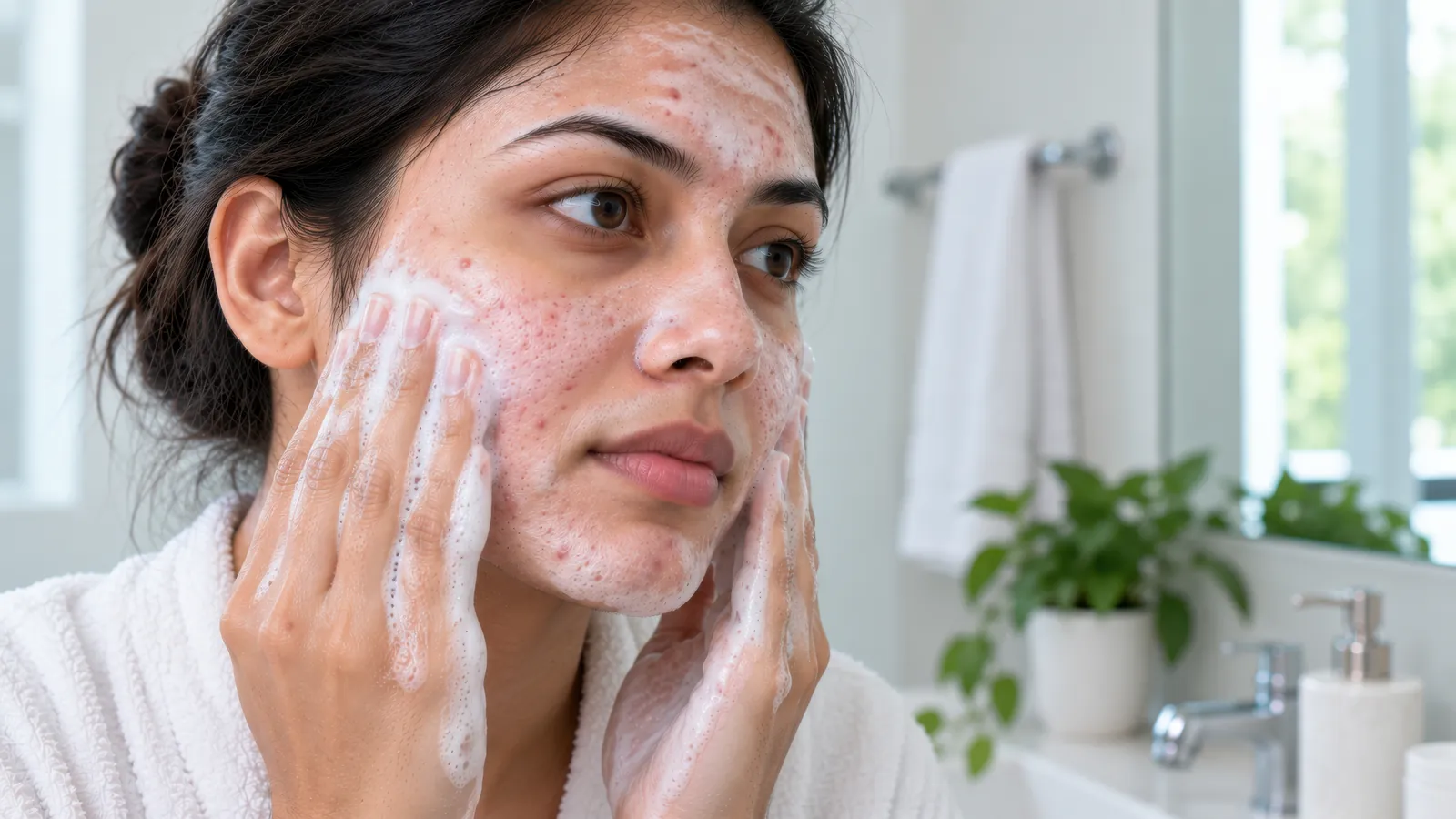
Sulphur Soap for Pimples and Fungal Acne: How to Use It
How sulphur and salicylic acid work on oily, congested skin, how to use a medicated bar without drying your skin out, and when to see a doctor.
 Acne & Oily Skin
Back Acne (Bacne): Causes, Prevention and Treatment at Home
Why back acne happens in Pakistan's heat, from sweat and backpacks to hair oil, plus simple prevention, home care and when to see a doctor.